
Add Row
Add Element
UPDATE
April 14.2025
2 Minutes Read

Unlocking AI's Potential: A Deep Dive Into Diffusion Models

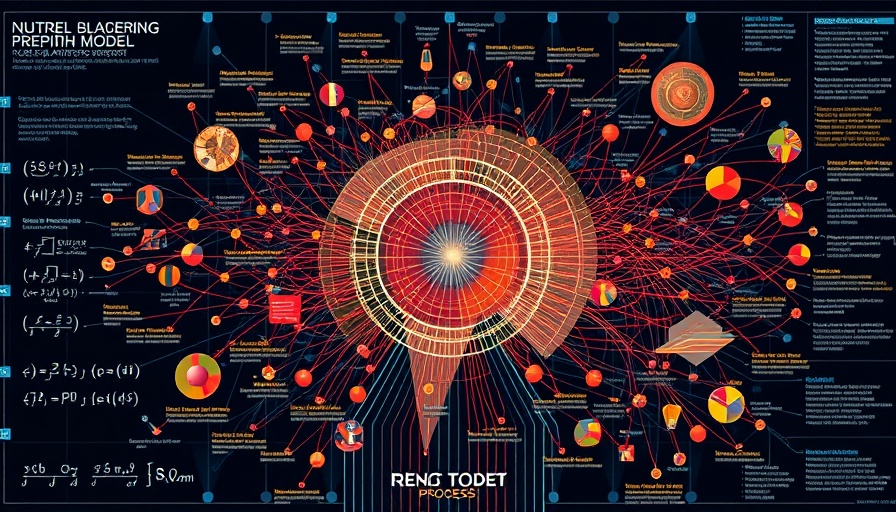
Diagram explaining how diffusion models work with formulas and architecture

Understanding Diffusion Models: A Mathematical Approach

Diffusion models are an innovative approach in artificial intelligence, significantly impacting how we interpret data and create predictions. These models stem from the principles of diffusion, which is a process that involves the gradual spread of something from one area to another. In the context of AI, it refers to how information or features are distributed across a space, revealing patterns that may not be immediately obvious.

The Basics: How Diffusion Works

At its core, diffusion modeling is about understanding how probabilities shift and change over time, much like how particles spread in a medium. This concept can be simplified using mathematical equations that demonstrate how probabilities can be structured over multiple steps, ultimately leading to a richer understanding of data behavior. As AI continues to grow, these models help machines learn to identify and replicate complex patterns seen in the world around us.

Applications in Artificial Intelligence

Diffusion models are increasingly prevalent in generating high-quality images and sophisticated data analysis. For instance, DALL-E, an AI tool that can create stunning visuals from text descriptions, leverages diffusion processes to enhance creativity and detail in its outputs. This illustrates why understanding the mathematics behind diffusion is essential for harnessing AI's full potential. As the technology continues to evolve, the applications of diffusion models will likely expand, affecting various industries from healthcare to entertainment.

Future Trends: What Lies Ahead

Looking forward, the development of diffusion models stands to revolutionize sectors that depend on data interpretation and visualization. Incorporating these mathematical frameworks into AI could lead to more human-like understanding and interaction within various applications. As we further explore the capabilities of these models, it is important for businesses and individuals alike to familiarize themselves with the mathematics involved; doing so could provide a competitive edge as AI technologies continue to advance.

Concluding Insights: Why This Matters

Understanding diffusion models extends beyond academic interest; it allows businesses and individuals to embrace cutting-edge technology effectively. As AI tools become more accessible, grasping foundational principles like diffusion could foster innovation across the board. Keener insights into AI's underlying mathematics can transform how we interact with technology, ultimately leading to more informed decisions and enhanced creative outcomes. As the landscape of AI evolves, those who understand these methodologies will be better positioned to thrive in an AI-driven future.

Other news

7 Views

0 Comments

Write A Comment

*
*
Related Posts All Posts
02.05.2026

Why Katie Spivakovsky's Churchill Scholarship Marks a New Era in Bioengineering

Update A Bright Future: Katie Spivakovsky's Achievements MIT senior Katie Spivakovsky was awarded the prestigious Churchill Scholarship for the 2026-27 academic year, marking a significant milestone in her journey as a scholar. This scholarship, which offers U.S. students the chance to pursue graduate studies at Cambridge University, is a testament to her hard work and dedication to the fields of biological engineering and artificial intelligence. A Vision for Equitable Health Solutions Spivakovsky's academic focus lies in developing innovative solutions that enhance health outcomes. By pursuing an MPhil in biological sciences at the Wellcome Sanger Institute, she aims to bridge computation and bioengineering. Her research involves the therapeutic applications of DNA origami and nanoparticles, showing her commitment to impactful science. Leadership and Mentorship at MIT In addition to her research, Spivakovsky demonstrates a remarkable dedication to mentoring fellow students. As the director of the Undergraduate Initiative in the MIT Biotech Group, she fosters a collaborative environment that encourages knowledge sharing. Her involvement in various teaching roles showcases her passion for education and nurturing future talents, ensuring that her influence extends beyond her immediate achievements. A Competitive Spirit with Global Significance The Churchill Scholarship is more than just a prestigious award; it symbolizes the long-standing tradition of U.S.-U.K. scientific exchange established by Winston Churchill. By earning this scholarship, Spivakovsky not only represents MIT but also contributes to this rich heritage, emphasizing the importance of collaboration in global research. Spivakovsky's Impact Beyond Science Her work has garnered recognition on international platforms, such as the silver medal at the iGEM synthetic biology competition, and highlights the importance of youth involvement in scientific exploration. Rising stars like Spivakovsky are paving the way for future innovators, reinforcing the belief that collaborative and interdisciplinary approaches will drive necessary advancements in health and technology. As Katie prepares to embark on her journey at Cambridge, her story serves as an inspiration to aspiring scientists everywhere. Her pursuits resonate with those interested in bioengineering, artificial intelligence, and the positive changes these fields can bring to society.

09.11.2025

MIT's New Center Revolutionizes High-Enthalpy Fluid-Solid Interaction Simulations

Update Pioneering Fluid-Solid Interaction Simulation at MIT The Massachusetts Institute of Technology (MIT) has been chosen by the U.S. Department of Energy (DOE) to lead a cutting-edge research initiative known as the Center for the Exascale Simulation of Coupled High-Enthalpy Fluid-Solid Interactions. This groundbreaking center is set to revolutionize our understanding of extreme environments, particularly those encountered during hypersonic flight and atmospheric reentry. Exploring Extreme Conditions Hypersonic flight, which involves speeds greater than five times the speed of sound, poses significant challenges due to the extreme heat and pressure that materials endure. The new MIT center aims to harness advanced computational models to simulate these conditions accurately, providing insights that could lead to safer and more efficient aircraft designs and enhancing our capacity to manage systems that experience high enthalpy interactions. Significance for National Security and Innovation Sponsored by the DOE’s National Nuclear Security Administration, the center's work is critical for national security applications. The ability to predict and model the behavior of materials under such extreme conditions advances not only aerospace technology but also other areas such as energy systems and defense technologies. This research is anticipated to drive innovation across multiple sectors, from energy to transportation. A Collaborative Future The establishment of this center underscores the importance of collaboration between academia, government, and industry. As researchers at MIT engage with partners, the potential for groundbreaking discoveries increases, making this an essential step toward solving future energy and security challenges. This initiative not only positions MIT at the forefront of scientific exploration but also emphasizes the role of advanced simulations in shaping our technological future.

08.20.2025

Meta’s AI Policy Exposed: Shockingly Permissive Guidelines Shocking Society

Update Meta’s Alarming AI Policy and Its ImplicationsA recently leaked internal policy document has raised urgent questions about the ethical boundaries of artificial intelligence at Meta. Originally reported by Reuters, this 200-page guide was supposedly sanctioned by Meta's legal and engineering teams, as well as its chief ethicist. What it revealed was shocking: instructions allowing for things like romantic roleplaying with minors and generating harmful pseudoscience.What Was Allowed Under Meta’s Guidelines?As per the leaked document, Meta's AI tools were permitted to engage in conversations with children that some would find unacceptable. For instance, roleplay scenarios could include romantic elements, and AI-generated claims asserting that one racial group is inferior to another were also tolerated, provided they didn’t use clearly dehumanizing language. Even false medical claims about public figures could be generated if accompanied by a disclaimer.Immediate Political and Ethical FalloutIn the aftermath of the leak, U.S. Senator Josh Hawley jumped into action, launching an investigation and demanding Meta to preserve related documents, including internal emails and incident reports. There’s a noticeable divide between posts by users and content generated by AI. Professor Evelyn Douek from Stanford Law highlighted this crucial distinction, noting that AI output can hold greater ethical implications.Understanding the Human ElementPaul Roetzer, founder of Marketing AI Institute, emphasized that these policies reflect human decisions. They are not just dry technical specifications; they are choices made by individuals about what is acceptable in AI interactions. Roetzer urged professionals in AI to define their own ethical lines, stating that cross-boundary actions by organizations demand personal reflection and accountability.ConclusionAs Meta revises its AI policy, the spotlight remains on how organizations will approach the ethical implications of their technologies. It's critical for AI developers to think about the impact of their work and the standards they uphold in their products. In a changing digital landscape, we must navigate carefully to avoid potential harm, especially to vulnerable populations like children.

Terms of Service

Privacy Policy

Core Modal Title

Sorry, no results found

You Might Find These Articles Interesting

T
Please Check Your Email
We Will Be Following Up Shortly
*
*
*