
UPDATE
July 23.2025
1 Minute Read

MIT Honors Faculty with Academic Promotions: A New Era in Architecture and Planning

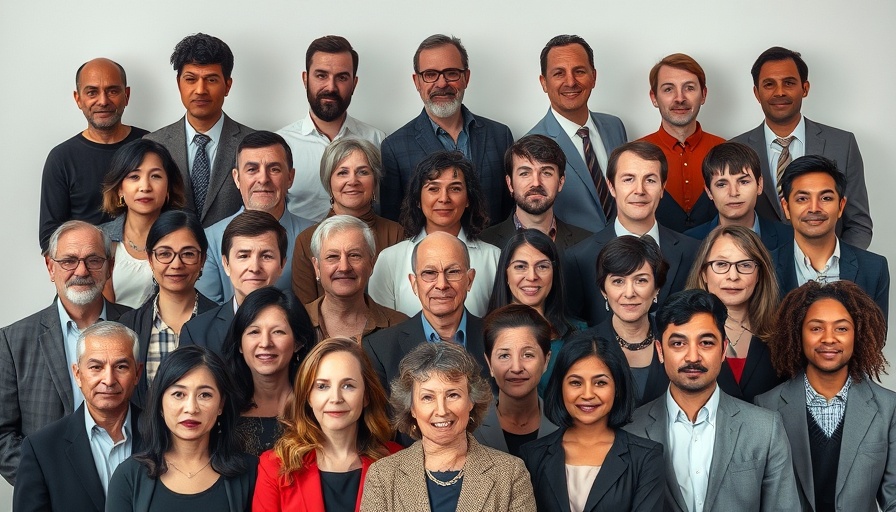
Prominent MIT faculty members showcasing diversity for academic promotions in 2025.

Celebrating Academic Excellence at MIT

The Massachusetts Institute of Technology's School of Architecture and Planning is recognizing the achievements of its faculty members through a series of academic promotions in 2025. This initiative not only highlights individual achievements but also showcases the diverse research and scholarship being conducted within the school.

A Diverse Range of Research

The faculty involved represents a vibrant mixture of disciplines, contributing to pressing societal challenges and innovations in urban planning, architecture, and environmental sustainability. Such diversity is essential, as it encourages a collaborative approach to complex problems that contemporary society faces, including climate change and urbanization.

The Importance of Faculty Recognition

Academic promotions serve as essential markers of success and acknowledgment. They not only motivate faculty to continue their research and teaching but also attract prospective students and faculty to MIT, enhancing the institution's reputation and influence in higher education. Such promotions can inspire current students, showcasing the path for professional growth and academic achievement.

Conclusion: A Bright Future Ahead

As MIT's School of Architecture and Planning continues to support its faculty's professional development, it also reinforces its commitment to fostering a vibrant academic community. This recognition not only spruces up individual careers but also contributes to a broader dialogue in architecture and urban design, ensuring that MIT remains a leader in innovative research and education.

Other news

31 Views

0 Comments

Write A Comment

*
*
Please complete the captcha to submit your comment.
Related Posts All Posts
05.16.2026

Meet the 2026 Knight-Hennessy Scholars from MIT: Pioneers in AI and Mathematics

Update A Groundbreaking Achievement in Academia In a moment that highlights the exceptional talent emerging from the Massachusetts Institute of Technology (MIT), Sunshine Jiang and Rupert Li have been selected as Knight-Hennessy Scholars for 2026. This scholarship, prestigious in its nature, provides each scholar with funding for up to three years of graduate study at Stanford University, a platform renowned for fostering innovators and leaders. Sunshine Jiang: Shaping the Future of AI Sunshine Jiang, hailing from Hangzhou, China, epitomizes academic excellence. A recent graduate with degrees in physics and electrical engineering, Jiang is diving into her Ph.D. in computer science this fall. Her research focuses on embodied artificial intelligence, specifically regarding robotics. Notably, her work develops data-efficient and adaptive systems, enabling general-purpose robots to broaden accessibility. Jiang's innovative spirit is highlighted by her AI-powered initiatives to connect traditional Chinese art with rural classrooms and her efforts to amplify female participation in STEM through cross-country educational programs. The Intellectual Journey of Rupert Li From Portland, Oregon, Rupert Li has made impressive strides in mathematics and now pursues a Ph.D. at Stanford. After earning dual degrees with a strong emphasis on data science, he further honed his skills at the University of Cambridge as a Marshall Scholar. Li’s research interests extend into probability and combinatorics, representing a growing field crucial for advancements in machine learning and algorithm development. His commitment to education shines through his mentorship roles, aiding high school students in mathematics research, thereby shaping the next generation of scholars. A Global Network of Scholars Jiang and Li are part of a broader cohort of 87 Knight-Hennessy Scholars, who hail from 31 different countries, united by their commitment to addressing pressing global challenges. The cohort's diversity enriches the discourse at Stanford, promoting collaboration across cultures and disciplines. Why This Matters The accomplishments of Jiang and Li resonate beyond their individual achievements. They symbolize the potential of today’s students to innovate for a better future, particularly in fields progressively influenced by artificial intelligence and data science. Their journeys reflect the importance of educational investment in nurturing young leaders poised to make significant impacts. Conclusion As we celebrate the success of these remarkable scholars, we can also reflect on the transformative role of fellowship programs in academic settings. Not only do they provide financial support, but they cultivate a spirit of inquiry and collaboration vital for advancing knowledge.

04.26.2026

Unlocking Potential: MathNet Reveals Olympiad-Level Math Problems to All

Update The Power of MathNet: A Game-Changer for Aspiring Mathematicians In an unprecedented achievement, researchers from the Massachusetts Institute of Technology (MIT) have unveiled MathNet, the world's largest collection of Olympiad-level math problems. This new data set, comprising over 30,000 expertly crafted problems from 47 countries, aims to provide aspiring mathematicians with a centralized training ground that has previously been unavailable to many around the globe. Catering to Global Minds: Breaking Barriers in Math Education MathNet is not just a volumetric triumph; it embodies diversity and accessibility. Traditionally, Olympiad-level datasets have primarily represented competitions from the U.S. and China. By encompassing a wide array of mathematical traditions across six continents and covering 17 languages, MathNet provides a more inclusive platform for budding mathematicians. As Shaden Alshammari, lead author from MIT’s CSAIL, noted, every country contributes unique and creative problems that deserve recognition, making MathNet a treasure trove of global mathematical culture. Expert Solutions: Quality Over Quantity One standout feature of MathNet is the meticulous nature of its solutions—each one is written by experts and peer-reviewed, offering a depth that many community-based sources lack. Other online forums often contain shorter, unverified answers, but MathNet's rigor ensures that learners receive comprehensive guidance through multi-faceted approaches to problems. This commitment to quality makes MathNet not only a valuable academic resource but also a reliable companion for anyone tackling complex mathematical challenges. Fostering Independence in Learning The motivation behind creating MathNet was clear: not all students have access to robust training from educational institutions. Many competition aspirants often train independently due to insufficient local resources. Alshammari expressed empathy for these individuals, recollecting her own experiences of navigating mathematical challenges without formal guidance. MathNet aims to level the playing field, giving students a high-quality, centralized database for enriching their learning experience and honing their skills. AI Performance Insights: What MathNet Reveals Beyond support for human learners, MathNet also serves as a benchmark for AI performance in mathematical reasoning. Recent assessments of GPT models revealed that even top-performing systems struggled against MathNet's problem sets, as they averaged only a 69.3% success rate. This disparity highlights areas for future improvement in AI mathematics capabilities and emphasizes the unique challenges posed by visual reasoning in mathematical contexts. Conclusion: A New Era in Mathematical Training MathNet represents a significant milestone in both educational and technological realms. By providing access to a vast and diverse array of Olympiad-level problems and expert solutions, it not only empowers students from various backgrounds but also challenges AI algorithms in novel ways. This groundbreaking dataset is poised to shape the future of mathematics learning and research, providing unparalleled opportunities for growth and advancement in this discipline.

04.18.2026

Jacob Andreas and Brett McGuire Honored with Edgerton Award for Transformative Work

Update Celebrating Achievements in AcademiaJacob Andreas and Brett McGuire are honored as recipients of the prestigious 2026 Harold E. Edgerton Faculty Achievement Award at the Massachusetts Institute of Technology (MIT). This accolade, established to honor the pioneering spirit of Harold E. Edgerton, signifies exceptional contributions to teaching, research, and service. The award reflects MIT's commitment to nurturing the next generation of innovators in fields ranging from chemistry to artificial intelligence.Groundbreaking Contributions in Their FieldsAndreas, from the Department of Electrical Engineering and Computer Science (EECS), is recognized for his exceptional work in natural language processing and artificial intelligence. He is particularly noted for developing frameworks that enhance machine learning capabilities while addressing social and ethical considerations in technology deployment. His innovative approach not only fosters theoretical advances but also translates complex AI concepts into tangible applications.McGuire, associate professor of chemistry, has made significant strides in understanding astrochemistry. His research utilizes sophisticated laboratory techniques and radio astronomy to explore molecular compositions in the interstellar medium. His work enhances our understanding of how carbon evolves in space, providing critical insights into the very building blocks of life on other planets.Making a Lasting Impact on Students and Their FieldsBoth award winners are not only leading researchers but also extraordinary educators. Andreas’s teaching approach modernizes natural language processing courses, making them pivotal for the new AI+D major at MIT, enrolling hundreds of students each semester. Meanwhile, McGuire’s engaging teaching style and commitment to student learning have generated enthusiasm and understanding in large undergraduate classes.They exemplify the mission of MIT to push educational boundaries while nurturing future scientists, engineers, and innovators, underscoring the interdisciplinary nature of modern research and education.

Terms of Service

Privacy Policy

Core Modal Title

Sorry, no results found

You Might Find These Articles Interesting

T
Please Check Your Email
We Will Be Following Up Shortly
*
*
*